
Breeding season is here for the goats!
Our family has been raising Nubian goats for about 6 years. We have found a few things to make our breeding and birthing seasons go better and be more successful. We thought maybe they would help other folks as well.

The goats are the price of the field. And thou shalt have goats’ milk enough for thy food, for the food of thy household, and for the maintenance for thy maidens.
Prov. 27:26-27
The biggest thing is to keep their minerals in balance. As we have stated in other posts, we keep minerals available at all times. We have poor soil and they are not able to get everything they need from it. Goats are ruminants and have high mineral needs. This is why they forage, trying things out here and there, and testing what they need and how much of it they need, with their sensitive mouths.
We have found Red Raspberry leaf to play a big role in fertility. It helps balance the hormone levels in the body, and causes the does to drop more eggs to then be fertilized. This means you’ll have more kids in the spring! We add about a 1/4 cup this daily to their water, for about 6 weeks coming up to breeding. It will discolor the water, and make it look like tea, but they still like it.
The soils around our farm are very, very deficient in Selenium. To help assimilate selenium, the body (ours and our goats’) needs vitamin E. So about 6 weeks before breeding, we give a BoSe shot, which is a mix of Selenium and Vitamin E to be given Sub-Q (Subcutaneous/Sub-Q is when the shot it given under the skin, verses injected into the muscle). In our state, this is only obtainable from our vet, but what we use can be found here. Selenium helps their muscles, help prevent miscarriages and stillbirths, and prevents the kids that will be forming from being born with white muscle disease.

Copper also plays a big role in fertility. If the goats do not have good copper levels, their coats will be dull, they will have worm infestations, and will not cycle regularly or possibly not at all. We give 1/2-1 teaspoon per head per week, and also have it to where they can get it if they need it. Copper is VERY important for the health of livestock.

You will need to have your buck ‘powered up’ in advance of him ‘working’. Make sure he is getting some grain, because otherwise he may lose some condition. We give our bucks about 2 cups/day, mixed with ACV. The ACV (apple cider vinegar) helps prevent the buck from getting kidney stones, as too much grain can cause this problem. We have thankfully never had it, but know others who have, and have a Dad who has! It is very painful.

When preparing for breeding season, think about what God says in Prov. 27:23
Be thou diligent to know the state of thy flocks, and look well to thy herds.
This means you need to have the ‘Shepherd’s Eye’ on what your livestock needs. It is part of being a Good Shepherd. Just like how our Good Shepherd, knows what each of us needs, and it isn’t always the same thing for each person at the same time.
Your planned ‘first fresheners’ will need to be looked at. Are they very large? They may need their feed backed down so they can lose any extra pounds before they are bred. Sometimes overly fat does won’t take, or won’t cycle right. We’ve had this happen once.
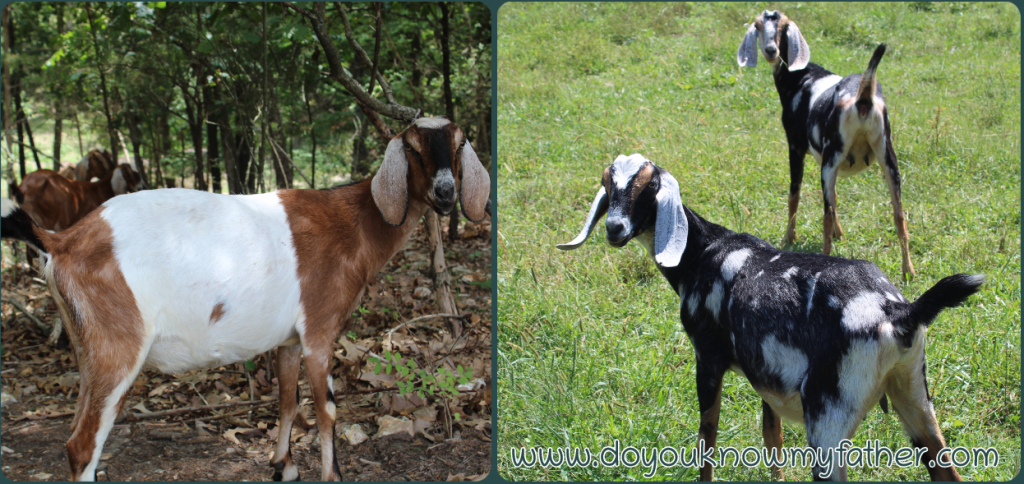
Are they pretty small? They may need some grain, alongside these other things, to get them cycling well and nourished enough to not just continue to grow themselves, but some little ones as well.

Looking at your milkers, do you need to start drying them off? Or do you need to up their grain intake so they can be in good condition to take to another breeding, continue to milk well and maintain their own condition? Is one of them milking well enough that she can ‘milk through’ without being bred this year? Is one ready to retire, having had her best milking life behind her?
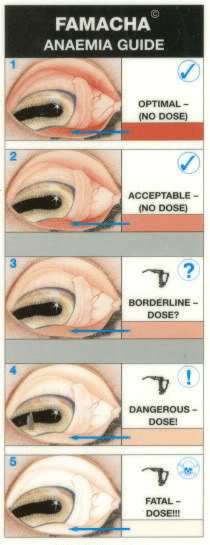
Check their FAMACHA levels. (See chart below if you don’t know what this is.) You may need to give more copper in rainy weather. If the worms come on them quickly, especially the Barber pole worm, they can drink pints of blood in a day and bring a goat down quickly, see our Worms & Goats post here.
These are things we do and the things we consider when getting ready to breed our goats.
And of course, we always pray that we are blessed with a happy, healthy, successful kidding season!

 Do You Know My Father?