Starting Your Slips
In mid-winter take your best sweet potato and put it in a quart canning jar filled with water. (DO NOT CUT YOUR POTATO!)
Don’t have a sweet potato you grew? That’s okay, just get a couple from the store.
Set your canning jar in the window sill. Change the water every few days, or when the water begins to stink.
After about 3 weeks, your sweet potato will start to sprout. Once your sprouts/slips are 3”-4” tall and leafed out, snip off the slips and put them in a pint jar of water.
Once they are in the jar of water, they will start growing their own roots.
If the slip or root growing process seems to be taking awhile, adding some compost to the water helps to speed up the growth.
Once your slips have grown roots that are 2-4”, they are ready to transplant.
We have found that it works best to plant them in a pot of dirt that is VERY wet.
This prevents them from going into shock, by just going straight from the jar of water, into the garden.
You want to keep them in your pot of wet dirt for at least 5-7 days, longer is okay.
If it is still cold outside, keep this pot indoors in a window sill as well.
Planting Sweet Potatoes Outside
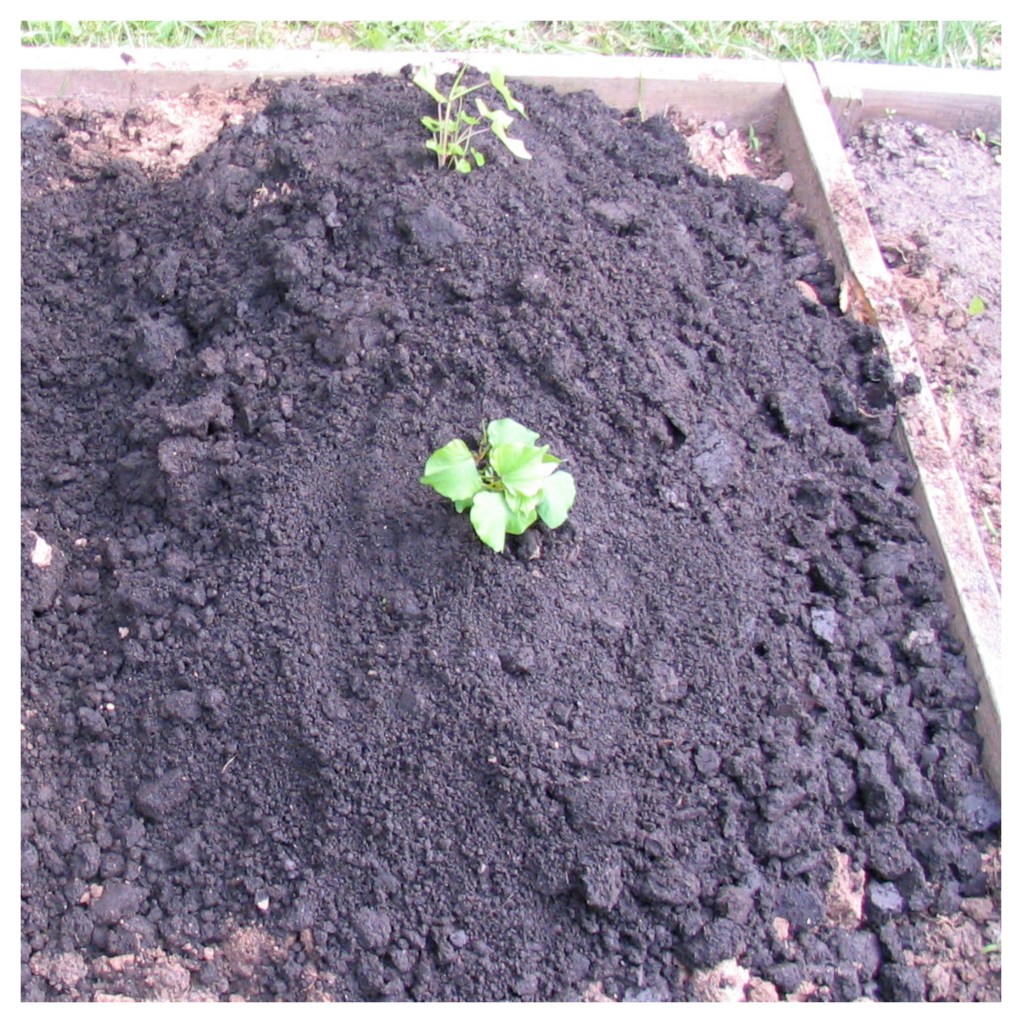
You want to plant your slips outside after your last frost date. With your hoe, make small hills about 1′ around and 1′ high.
With your hoe handle, make a 4” deep hole in the center of your hill. Take your slips (we like to do 3-4 per hill), spread out the roots and cover with dirt. Then top your hill with compost.
Watering
Water WELL everyday until plants are established. This is VERY IMPORTANT!
Once established water a couple times a week (unless it rains, of course).
Pests
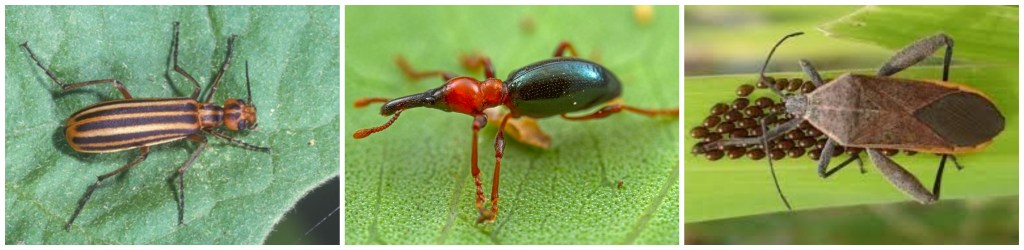
There are many garden pests who will attack your potato vines. These include sweet potato weevils, sweet potato beetles, wireworms, flea beetles, and blister beetles.
If any pests attack your sweet potato plant, spray Neem oil (organic spray) 1-2x per week, or more depending on how bad the bugs are and how much damage they are causing.
If it is blister beetles that are eating your sweet potato plants, remove them WITH GLOVES (THEY DO GIVE BLISTERS) into soapy water. You will have to be on top of it checking daily, or several times daily, until they are gone. Otherwise they WILL destroy your plants.
Feeding the Plant
If your sweet potato leaves are looking a little yellow, or just not growing well, you need to feed the plant. You need to add compost around the hill and plant. It is also a good idea to put hay or mulch around the hills in the dry season, to keep the moisture in.
When to Harvest
Harvesting is an exciting time, and a time to be thankful to God for what He has blessed us with. Ecc. 3:13 says, “Every man should eat and drink, and enjoy the good of all his labour, it is the gift of God.”
Before your first frost date (it is alright if the plants get frosted on, just make sure they don’t get frosted on repeatedly.)
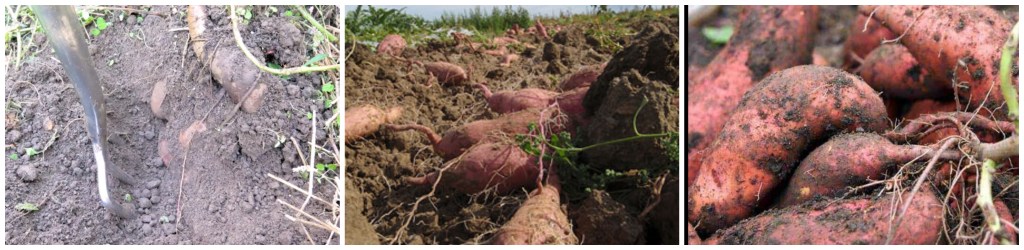
Take a potato fork and dig up the hills, being careful not to dig the fork into the potatoes themselves.
Carefully brush off any dirt with a soft bristled brush, making sure you do not remove or scratch the skins.
Storing
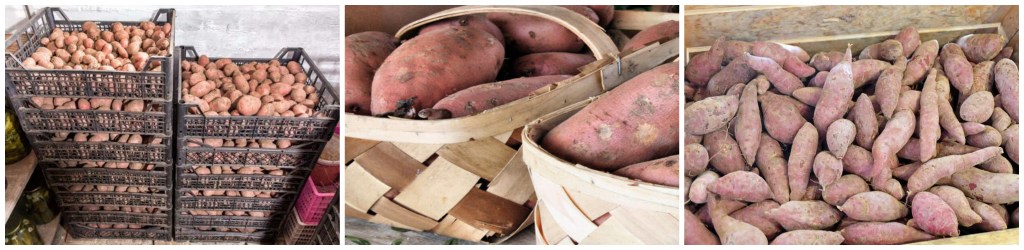
Store them in a cool, dark place to let them cure for about two weeks. You can begin using them after this time; but they longer they cure, the sweeter they will be!
Preserving
If your sweet potatoes are not keeping well, for whatever reason, you will need to can them.
Prov. 12:27 says, “the substance of a diligent man is precious.” We don’t want what is ‘precious’ to us to go to waste!
Canning
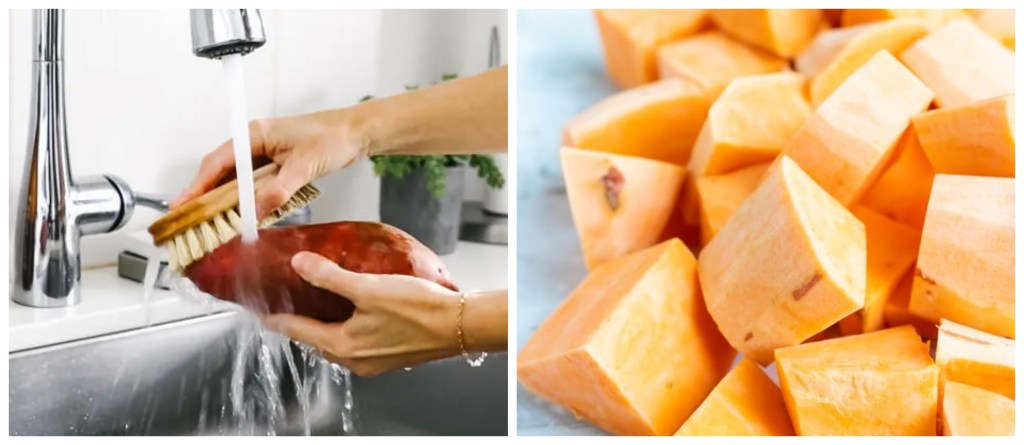
You begin this process by washing the potatoes well. Cut them into bigger chunks, (you can peel now, or after the boil) put them into water and bring to a boil. Let them boil for about 10 minutes, then remove from heat. Do not strain the water out of the potatoes; you are going to use it in a moment.
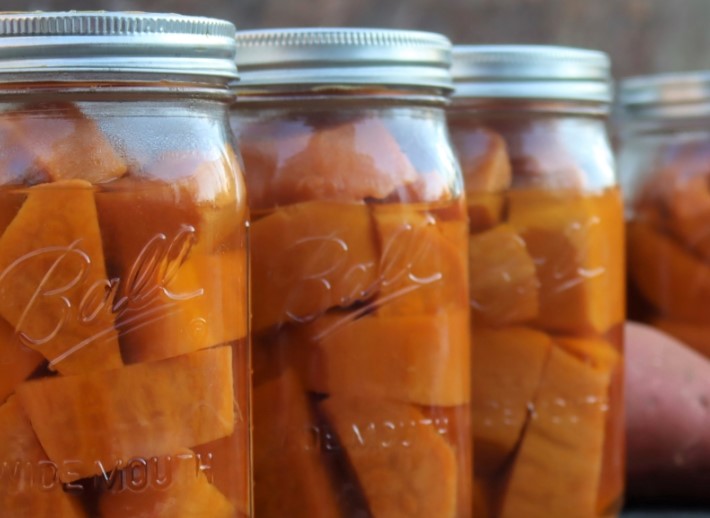
Take the potatoes out of the water with a slotted spoon. If you did not peel them beforehand, you can slip them off now. Fill the jars with the peeled potato chunks.
Ladle the water you boiled them in over the potato chunks, leaving 1” head space between the water and lid. Put your lids and rings on the jars tightly.
Place your jars in the canner with hot water, and slide the lid into ‘lock’ position. Once steam starts to come out of the vent pipe, set your timer for 10 minutes.
When your timer goes off, and your ten minutes in up, put the weight on, and let the pressure build up to 10psi.
If you used pint jars, keep at 10psi for an hour and 5 minutes.
If you used quart jars, keep at 10psi for an hour and a half.
When the time is up, let cool as the pressure comes out. When all the pressure is out (your psi is back to zero) Remove your jars from the canner. DO NOT re-tighten bands if they came loose.
Allow to continue cooling for about 12 hours or so.
Check your seals (use any if they didn’t seal, soon) and store.
DON’T FORGET! Save some of your potatoes to start your slips in mid winter! Then you’ll never have to buy slips from a greenhouse again! 🙂
What to do with Canned Sweet Potatoes?
You can heat them up straight from the jar, mash, and put cinnamon and butter on them, or you can add them to soup.
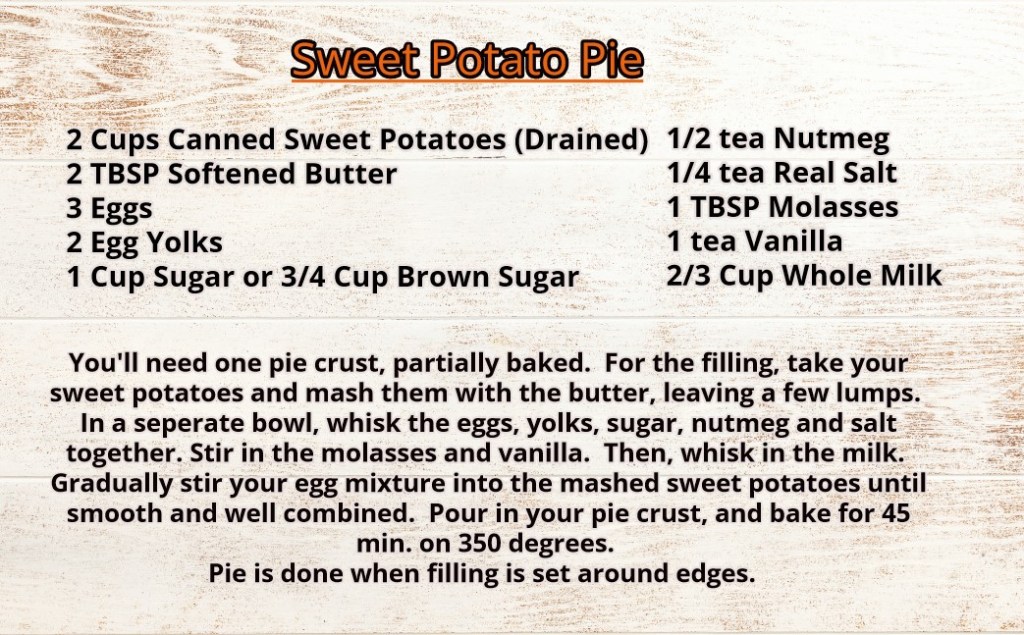
Have you ever had Sweet Potato Pie? If you like Pumpkin Pie, Sweet Potato Pie is just as good. Some in our family would say EVEN BETTER!
Here is our family’s favorite recipe:






 Do You Know My Father?