Zucchini: Planting, Nourishing, Harvesting, & Preserving

Zucchini is one of the easier vegetables to grow, making it very rewarding. If you can take keep the squash bugs away, you can get a lot of zucchini from just a couple plants!

Planting

You want to make sure you get heirloom seeds. We like the Black Beauty variety. We start zucchini in the spring, and then again in the fall. First you will want to make a hill about 6” tall and 1” wide. Then, put two seeds into each hole, 2” apart and push down a half inch. Cover with manure or compost, and water well.

Nourishing

When your plants look like the above photo, it will be time to feed them again. Put 3 TBSP of kelp around the base of each plant, then add some more compost or manure. Continue to water as needed.

If, as your plants grow and start to bloom, you see only male and no female blooms, you won’t get many zucchini without doing something about this.You need males to pollinate the females. The female plants are the ones that will turn into a zucchini. If you do not know the difference in male and female blooms, use the photo below as a guide.

If we have this problem, here is what we do to help.

De-solve 2 TBSP of Epsom salt in a gallon of water and pour it around the base of the plant. Do this for each plant that you are having the problem with.

Harvesting

You can harvest your zucchini whatever size you like them. To harvest, all you have to do is grab the fruit and twist. If you like them small, make sure you keep an eye on them. They get big very quickly! The bigger they get, the more spongy they will be, and are less tasty when they are spongy.

If you are wanting to save seed from them, let one get as big as it will. Sometimes they will turn an orange-ish color once they are big. This does not mean you can’t save seed from them. They are still good for seed.

When you harvest, remember to pray who to give your first fruits to!

Honour Yehovah with thy substance, And with the firstfruits of all thine increase: So shall thy barns be filled with plenty, And thy presses shall burst out with new wine.

Proverbs 3:9-10

Saving Seed

When you pick the one you have let grow and go to seed, pick it and cut it open. Scoop out the seeds with a spoon, and lay the seeds out to dry on a tray for 2-3 days. Then, store in a jar with an airtight lid.

Preserving

The best way to preserve your zucchini is to either freeze or can it.

To freeze the zucchini, first you need to shred it. We have not had good success with freezing slices. When you have finished shredding the zucchini, squeeze out the juice/water. Put in a Ziploc bag and freeze.

To can, we use the following recipe:

Want a way to use your shredded zucchini? We enjoy making Zucchini bread, too! You can even use the above recipe for Pineapple Zucchini in place of the regular shredded zucchini the recipe calls for. We love using the recipes from America’s Test Kitchen, and this is one of them.

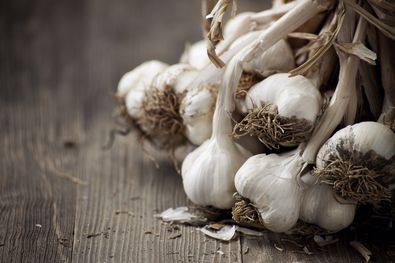
Planting, Growing, & Preserving Your Own Garlic

When you plant garlic, you plant the garlic cloves.

You want to start by breaking your cloves apart from each other. Do not pull the ‘paper’ off of your cloves. Make sure to pick your biggest and best looking cloves, not the inside ones that are small and clumped together. Otherwise, you won’t have big bulbs when you harvest them midsummer.

He which soweth sparingly shall reap also sparingly; and he which soweth bountifully shall reap also bountifully.

2 Cor. 9:6

Planting

Garlic grows best when planted in the mid fall. First, work up your soil where you want to plant it well, and mix in plenty of compost.

In a straight line, you start planting by taking the garlic cloves, with the stem pointing up in the air and roots pointing downward, and push it into the soil. Leave only the stem sticking up above the soil.

Keep repeating this process, making sure to plant the cloves 4 inches or so apart from each other.

When you have finished planting them, you will want to cover them with straw or old hay (and keep your chickens out of the beds!) Wet down the straw or old hay so that it doesn’t just blow away.

Growing

In the Spring, they will start to grow some tops. They will continually get taller, making bigger and bigger bulbs throughout the spring and early summer.

Garlic does not need as much water as other plants. If you water 2x per week, they will do well (remember to minus the rain you receive).

Harvesting

Note: Before you harvest, it is easier to pull them up if you wet your soil a day prior to harvesting. If you don’t want to do that, you can always use a shovel; but remember to dig them carefully!

When the tops of the garlic are laid over and dry, it is ready to be harvested.

This should be mid to late summer.

Preservation/Curing

After you have pulled/dug your garlic, lay them to dry on a table outside in the shade. Keep them there (unless it rains; then move them into a barn, garage, etc) until the stems are dry and brittle.

How do you know when the stems are dry? When you can break them easily, and they feel brittle like straw or old hay.

Why do they have to be dry?

You want them to be dry, so that when you braid your stems together, they do not mold, wasting your time and harvest.

Storing/ Hanging

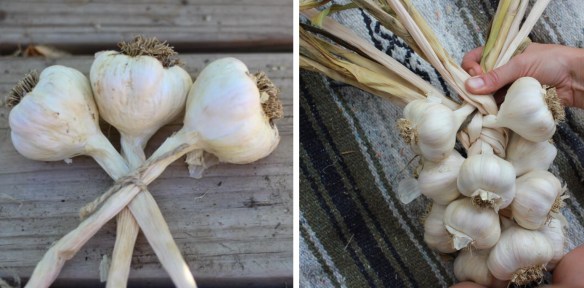
We like to store our garlic by braiding the stems together and hanging them in the coolest, driest place possible.

To begin braiding, take 3 garlic (we leave our stems long and intact) and begin braiding them like you would someones hair, adding more as you go, like in a french style braid.

Take some sort of twine, yarn, or whatever will do the job and tie the end of your braid. Knot, and make a loop to hang it from. Hang your loop on a nail or something in a cool dry place. If some of your bulbs break off, it’s alright. You can store them in an onion bag or just use them first.

Don’t forget to save some back to replant in the fall!

May Yehovah bless you as you grow some of your own garlic for the first time!